
Making
This page is about the making. The fabrics I chose and why. The details that only reveal themselves when you put the suit on. This page shows you the fabrics, the details, the small rituals that go into each suit.
Hij is binnen en ik vind hem prachtig :) Dank voor alle zorgvuldigheid zelfs bij het inpakken en versturen.
– Nike
THE COLLAR
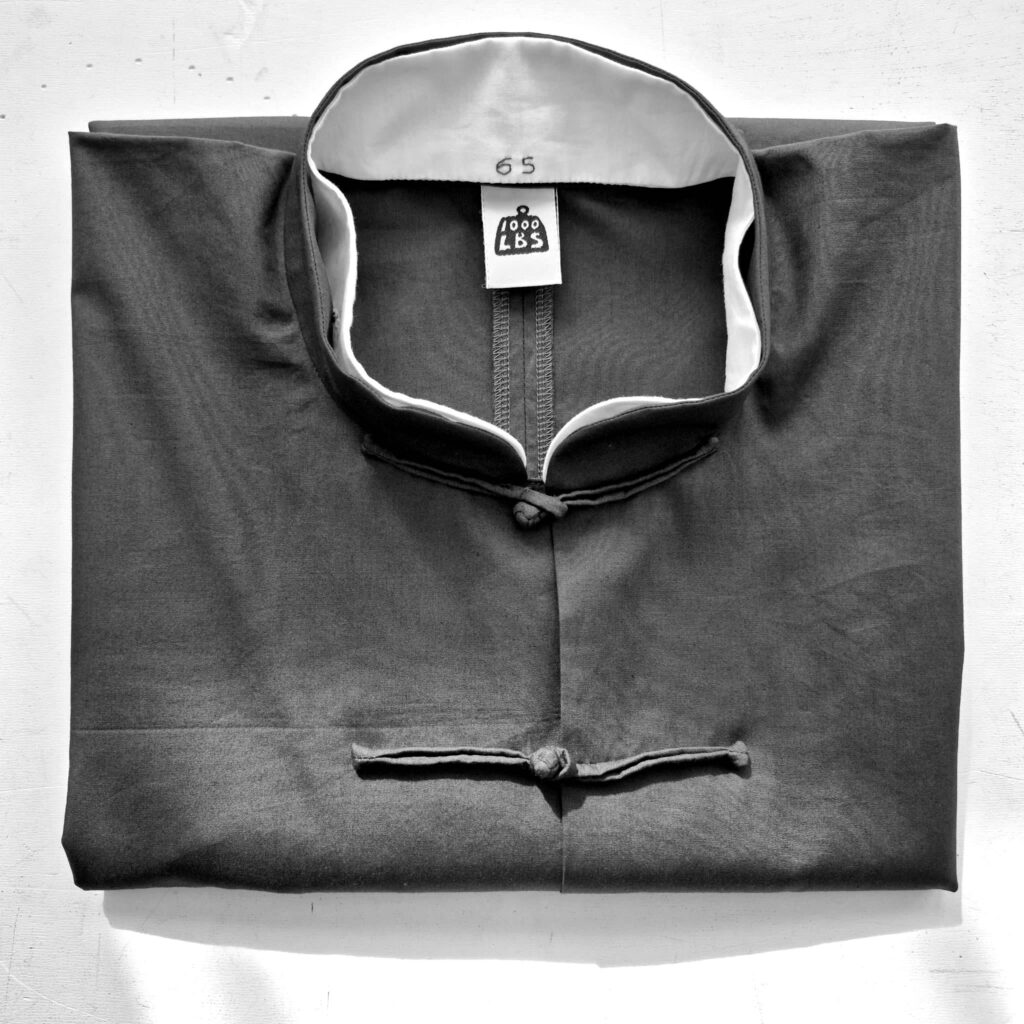
A mandarin collar with a removable white facing — so you can wash it separately, or swap it out mid-practice on a warm day. Each white collar is numbered to match its suit, so it always finds its way home.
THE FROG BUTTONS
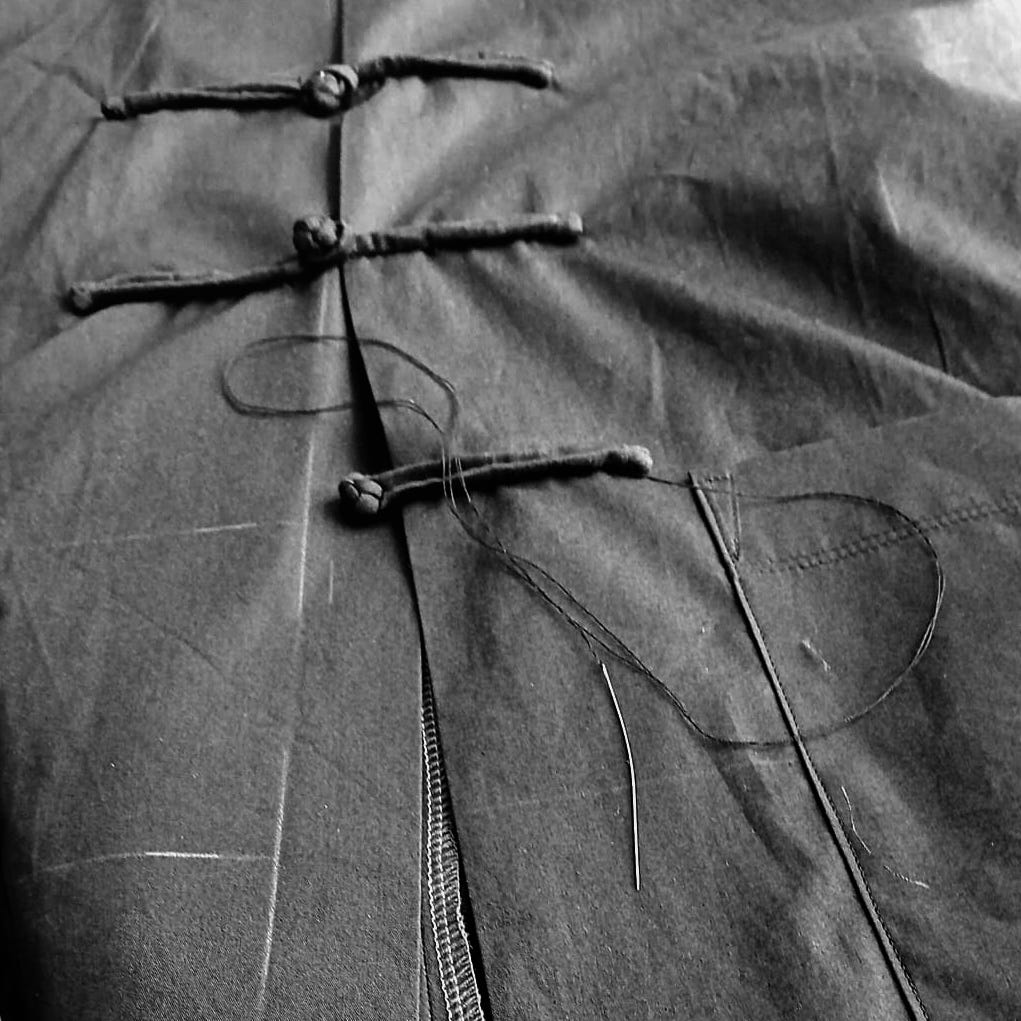
The straight frog, made from the same fabric as the suit. Simple, traditional and strong. I find making them relaxing. More about frogs in the frog button post.
THE TROUSERS
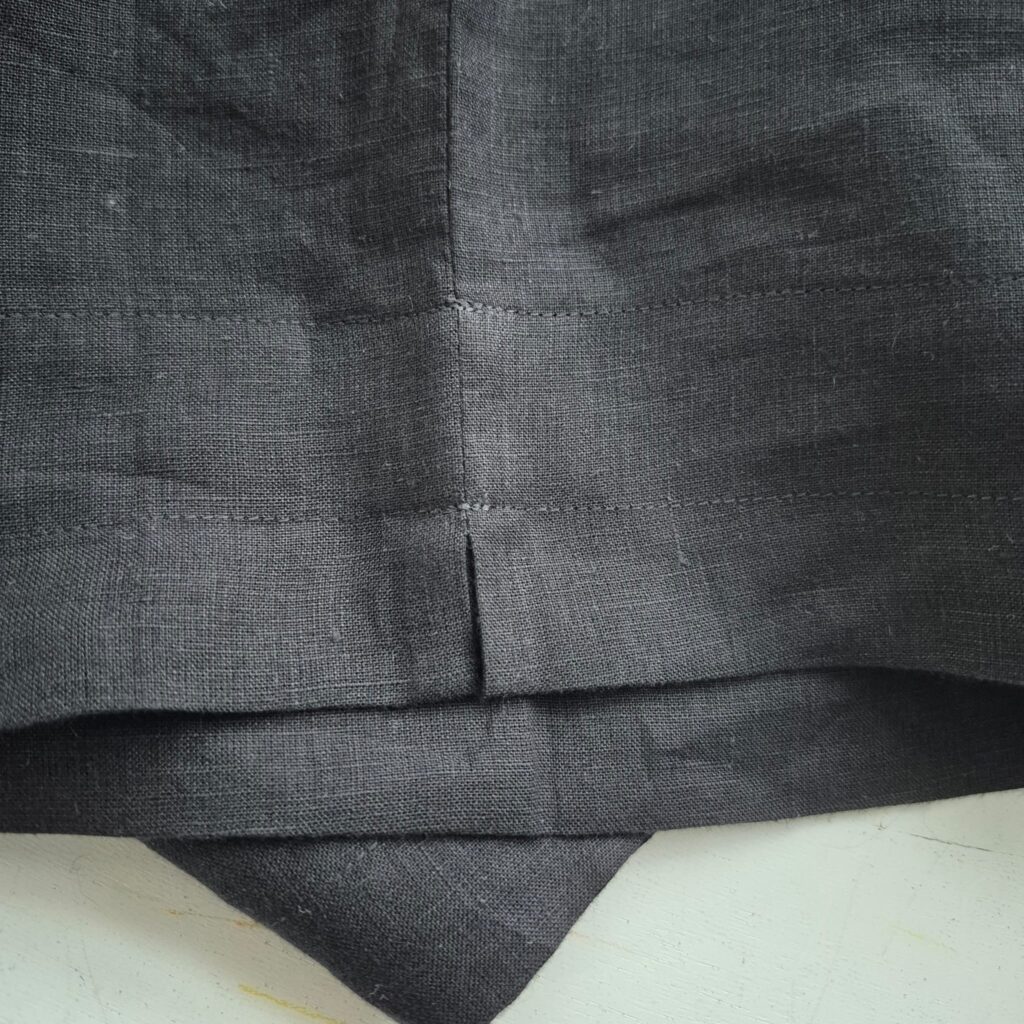
Wide cut with a generous gusset — essential for deep stances and low, rooting movements. The waistband is finished on the inside with a white facing and a drawstring. At the bottom of each leg there is a small opening with a tunnel: thread a drawstring through if you like a gathered leg, or leave it as is for a wide, open hem. The top of the waistband is finished with a bias band in the suit fabric — a small detail that strengthens the rim and makes the inside as considered as the outside.
THE SLEEVES AND CUFFS
Wide sleeves for unrestricted movement. The cuffs turn back to reveal a white underlayer — the same white as the collar, making the suit two-toned as standard. It is the yin-yang of the suit. If you prefer a monochrome version, just say so.
THE SEAMS
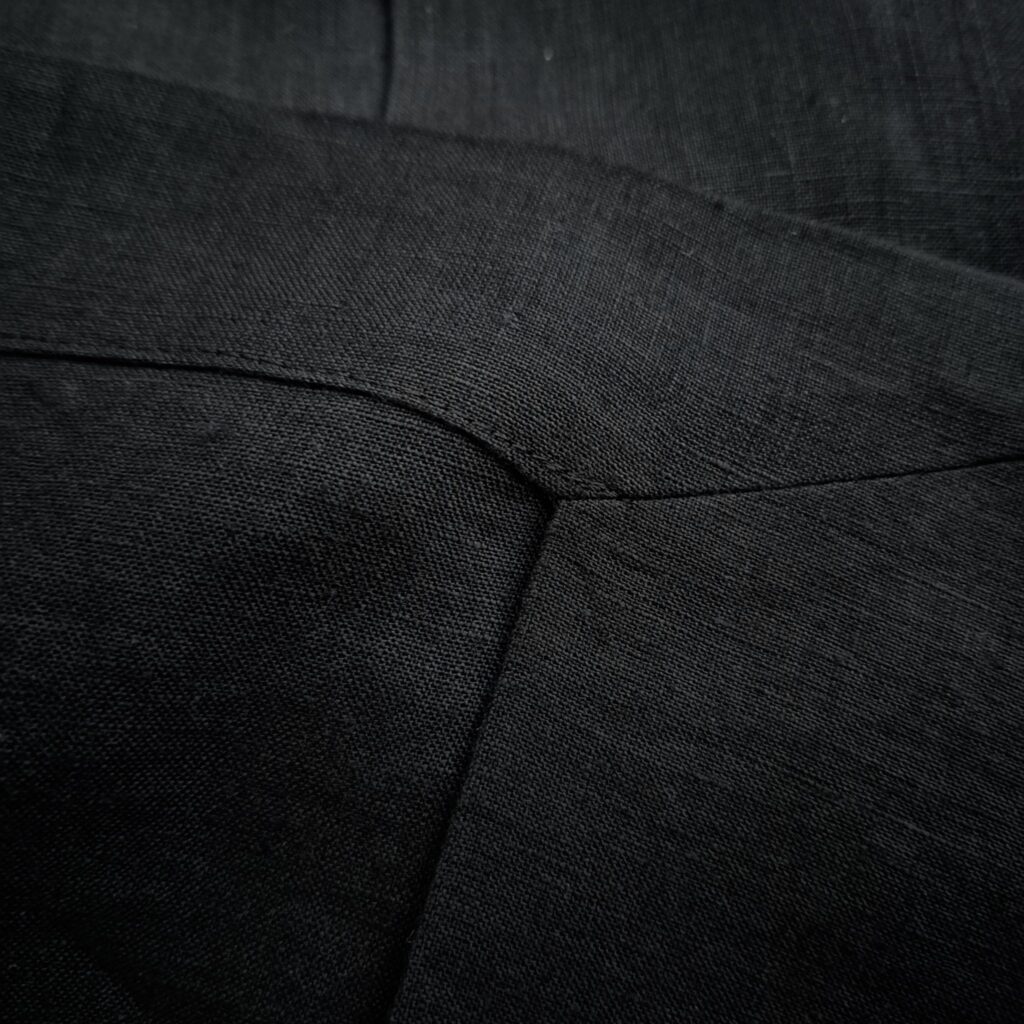
Overlocked throughout, with a characteristic coloured thread visible on the inside — precise and sturdy. Bar tacks reinforce the stress points: the gusset, the drawstring tunnel, the side vents. The jacket and trousers both have a wide hem at the bottom, which gives the suit a clean, settled finish.
THE NUMBERING
Each suit carries its number in three places: hand-embroidered on the white collar facing, on the waistband, and in white thread along the hem of the jacket. Cotton suits are numbered in red, linen suits in deep yellow. Cotton suits and linen suits are numbered in their own sequence — that little number is a maker's mark. Like signing a painting.



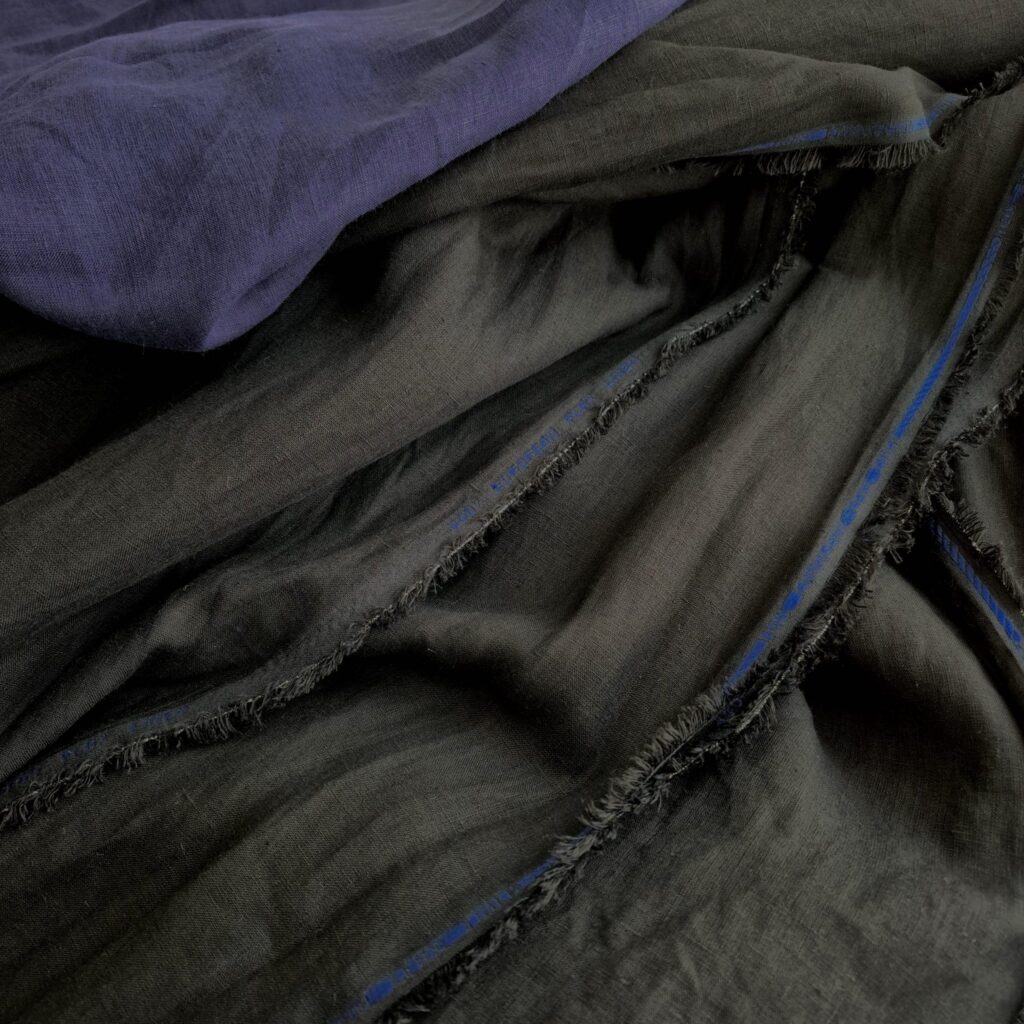
THE COTTON - 120 gr/m2
Light, breathable, soft. Moves with you. Comfortable all year round. It is GOTS certified — Global Organic Textile Standard, the most rigorous certification for organic textiles. It covers the full chain, from field to finished fabric: no harmful pesticides, no toxic dyes. It also requires fair wages, safe working conditions and no child labour at every stage. No self-declared claims, but independently verified at each step.
THE LINEN - 125 gr/m2
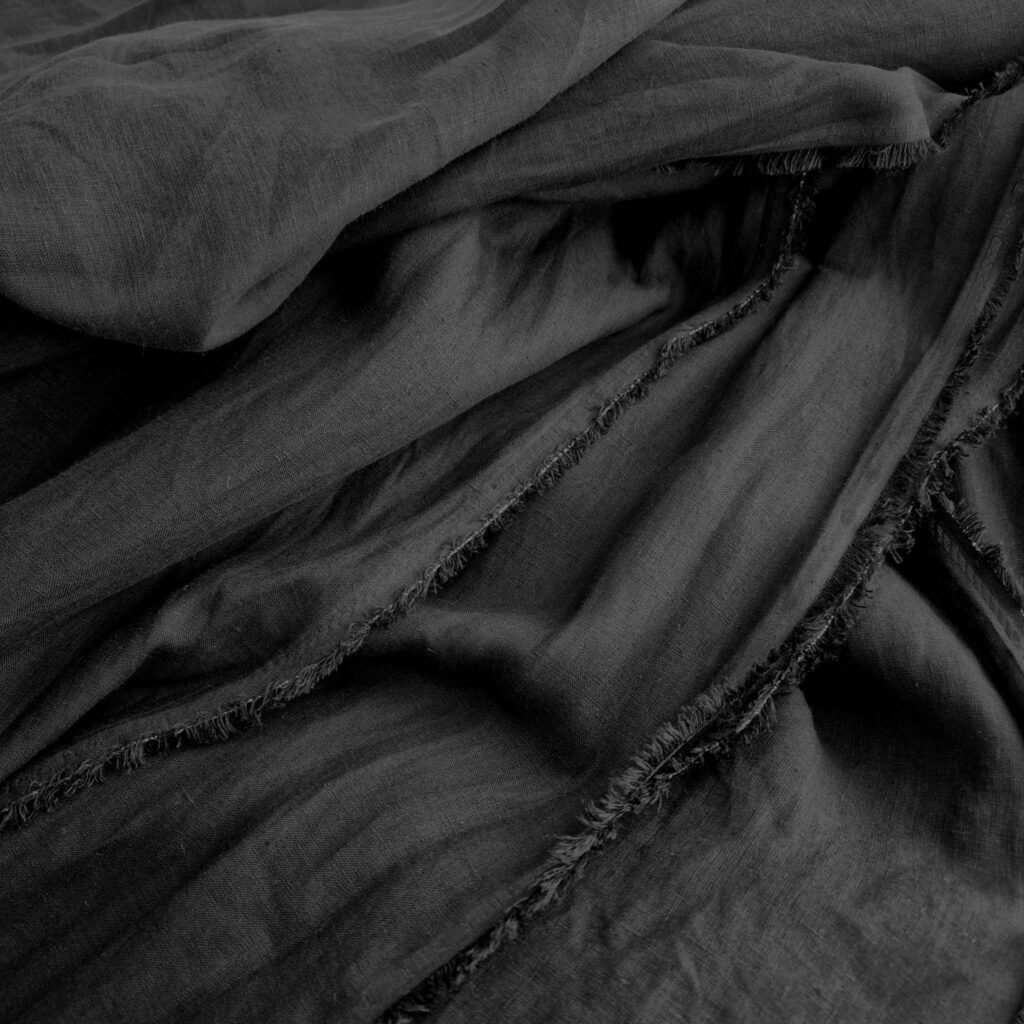
Flexible, gets softer and more beautiful with time. Cooling properties, so perfect in hot weather. The linens carry the Masters of Flax Fibre™ label, a traceability guarantee for premium flax grown in Western Europe — France, Belgium, the Netherlands. The climate and soil here have supported flax for centuries. No irrigation, no GMOs. The transformation from plant to fibre is mechanical, chemical-free.
WHY THESE TWO?
Knowing the land, the people, the cloth have been treated well — that's part of the pleasure of wearing a 1000 LBS suit.
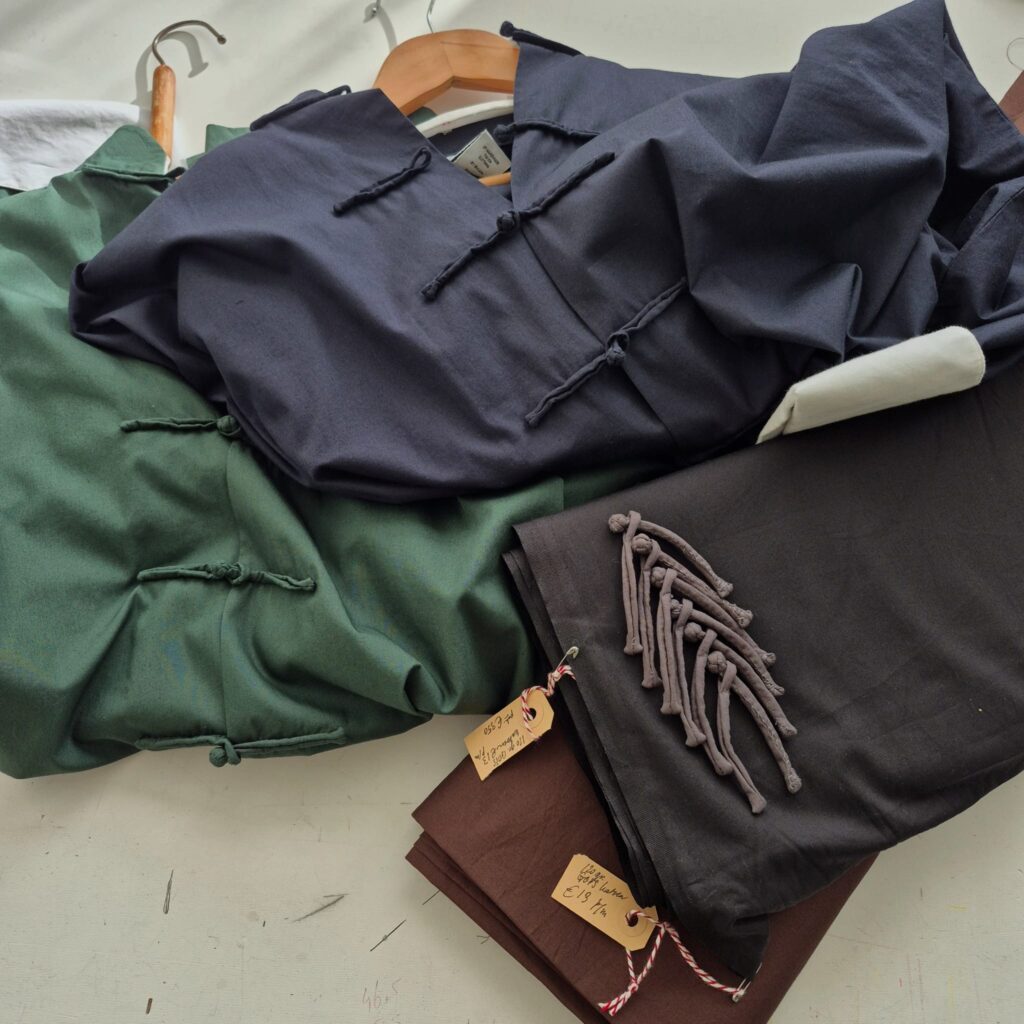
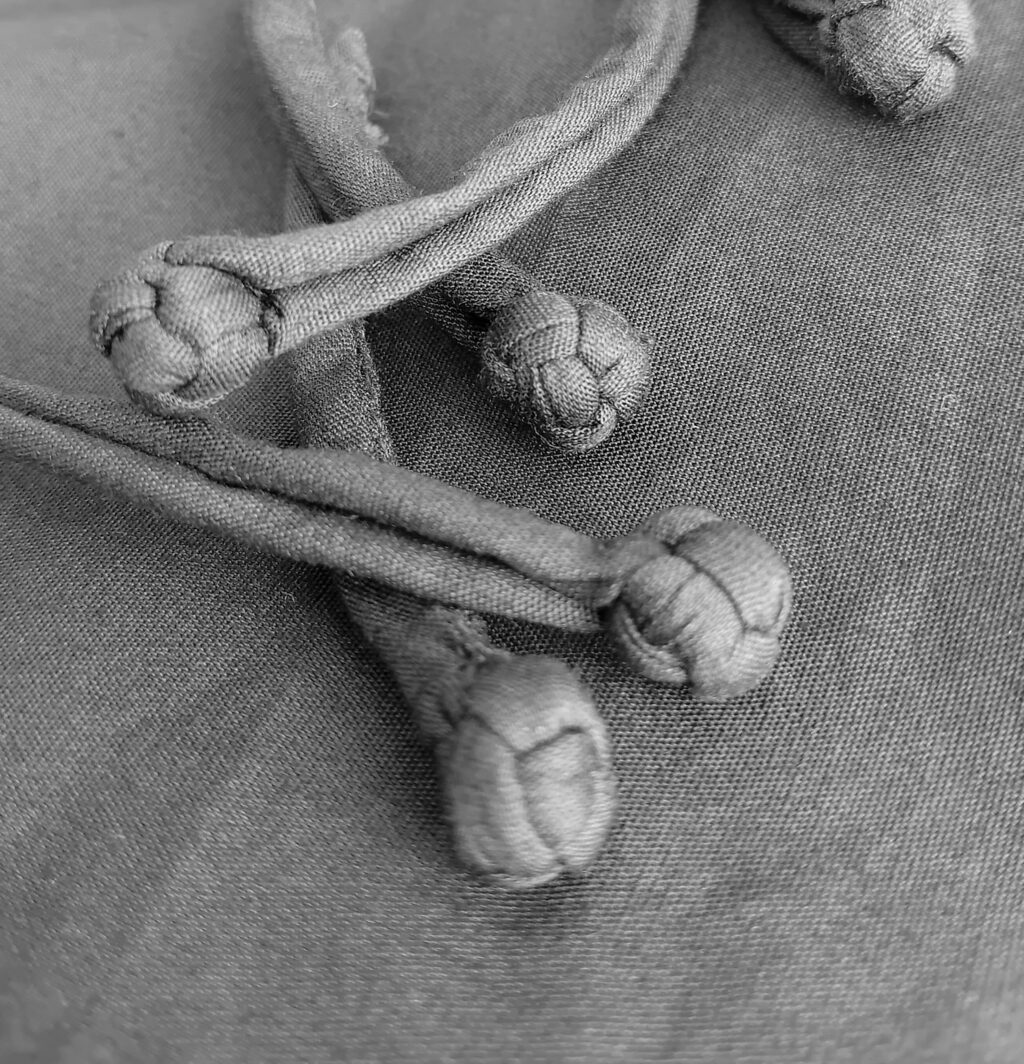
The small knotted button on each 1000 LBS jacket is called a frog — or in Chinese, a pankou. It is one of the oldest garment fastenings in the world.
A frog consists of two parts: a decorative knot on one side, and a loop on the other. The knot is considered the male element, the loop the female. Yin and yang, expressed in a button.
The 1000 LBS jacket uses the simplest and most traditional form — the straight frog. No flourish, no decoration. Just the knot, the loop, and a thousand years of craft.
I love the ritual of making the frog buttons. They are made by hand, slowly, from the same fabric as the suit.
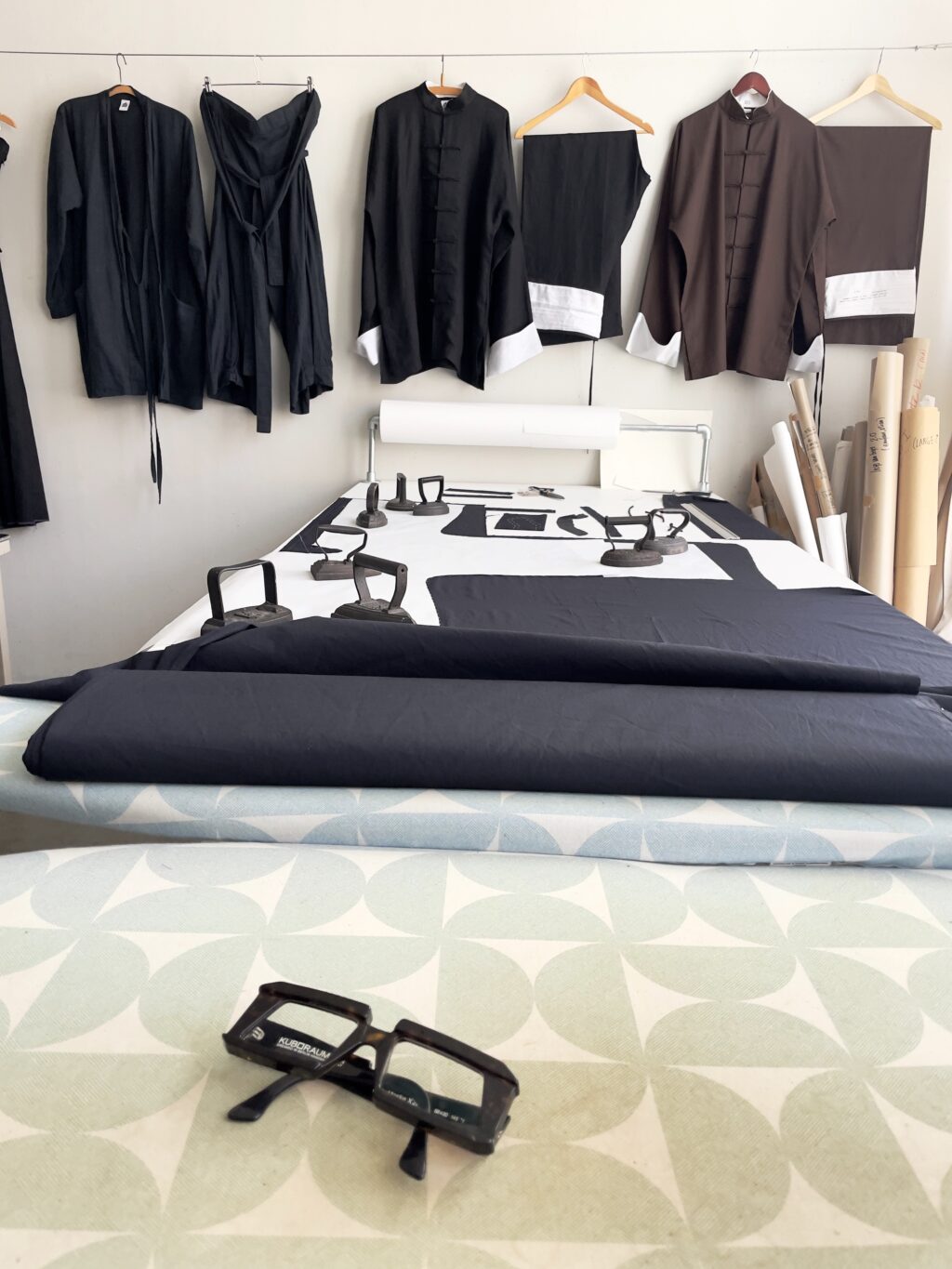
Process of making the suit
It all starts with washing. Every length of fabric goes into the machine before a single line is drawn — with a splash of natural vinegar added to the cycle, to fix the colours and keep the fibres supple. Cotton and linen both shrink — better now than later, on your body, after the first wash. What comes out is a little rough, a little wild. The iron settles it. Only then is it ready for what comes next.
Drawing and cutting are where the suit becomes yours. After a year of making, I have a whole family of patterns. I find the one closest to your measurements and work from there — adjusting the collar, sleeve length and width, jacket length and waist. For the trousers: the rise, leg length and width, the waistband. There is a traditional proportion I aim for: the trouser leg width should be half the waist width, so that when folded flat, top and bottom align. It doesn't always work — bodies are too various for that. Part of the joy of custom making is the sheer difference between people. No two bodies are the same.
Then: assembling and pressing. Assembling and pressing. Assembling and pressing. The iron is not finishing — it is building. Every seam pressed before the next one crosses it, every hem flattened before it is stitched down. This is what gives the finished suit its crispness, its weight, its sense of being made rather than merely sewn.
The last things done by hand: frog buttons attached, collar buttoned, number embroidered. Then it is finished.
The ritual of getting the package ready to send your way is always a nice moment. It is checking the whole suit one last time. Cutting away all little threads. Ironing the suit and pressing all the seams once more. Folding it to a neat rectangle. Wrapping it in recycled paper and sending it in dito envelope!